Lindsey O'Shea knew her town of Midlothian, Texas, was on track to nearly double in population, and decided her functional medicine practice needed a physical home to grow alongside it. She wanted to offer the kind of hands-on care that only happens in person like IV therapy, hormone support, sauna and red light therapy. Eighteen months later, Elite Wellness and Functional Medicine is a four-person team on track to clear a million dollars for the second year running, and Lindsey says the biggest factor in that growth was whether the software underneath her practice could scale at the rate she needed.
Elite Wellness and Functional Medicine is a brick-and-mortar practice in Midlothian, Texas, just south of Dallas, offering many in-person services that a virtual clinic can't: IV therapy, hormone replacement, sauna, red light therapy, and IV ozone treatments. Lindsey is a nurse practitioner specializing in women's health, also certified in functional medicine, and the practice now includes a clinic manager, a health coach, a registered nurse, and an incoming second nurse practitioner, all working within Practice Better.
Before she opened her own doors, Lindsey worked at a med spa, an aesthetics-first environment with no real infrastructure for the kind of care she wanted to deliver. Client intake ran on paper forms. Follow-up and education happened over standalone email threads that raised more HIPAA questions than they answered.
That gap is common across the functional medicine field. A typical new-patient visit already produces more documentation than almost any other practice type: a lengthy intake, a testing protocol, a supplement plan, and a follow-up strategy, frequently spread across three or four disconnected tools. Lindsey had lived that fragmentation firsthand, and she wasn't willing to build a growing team on top of it.
{{free-trial-simple-text}}
Lindsey started evaluating EHR platforms at the same time she was scouting locations for her brick and mortar practice, treating both decisions with equal weight.
“I didn't want to have to be messaging people, calling people if I had issues. Practice Better had all of their videos and how-to forums and all of that…And so just knowing if I was working on it at 11 p.m. or 5 a.m. that I was going to be able to find my answer no matter what. I didn't have to wait until nine to five when somebody was answering a phone call.”
She spent six to eight weeks before opening customizing forms, consents, and note templates inside Practice Better. When she made her earliest hires, a clinic manager and a collaborating physician required by Texas law, she used Practice Better's administrative role instead of paying for two additional provider seats neither of them needed.
"I wasn't having to pay for another provider at that point. It was just me, the health coach, and then the other two, my clinical manager and my collaborating physician, were both able to be an administrative provider in there."
That single decision let her build a four-person operation from the outset without four provider-level costs. She has since extended her clinic to include a registered nurse and a second nurse practitioner.
Hear how Lindsey keeps her growing team aligned with one platform:
With four people now working inside client charts and messages, Lindsey needed collaboration that didn't route every question back to her.
"If anybody messages me directly, or if I send a message to a client, my clinic manager automatically gets those messages too... If it's something she can take care of, she just takes care of it, and then I don't even have to think about it."
Her clinic manager resolves what she can and flags the rest for a specific window later in the day, rather than interrupting Lindsey mid-appointment. Shared notes and shared schedules mean nothing depends on one person remembering to pass information along.
Lindsey approaches the health of her clients with a basics-first mentality, addressing diet, sleep, stress, and basic nutrient gaps before moving on to advanced testing. After going through the same process with each of her clients individually, she realized she could build it into an eight-week program inside Practice Better. This way she can support her clients virtually, between sessions, and offer a group setting for a shared experience.
"We were able to not just put information in there, but we were able to do voiceovers, add YouTube videos… we also integrated with a chat. So when we have a new cohort that comes in, that cohort all gets a chat."
Weekly live Q&A sessions land directly on each client's appointment calendar inside Practice Better, no separate login or outside meeting link required. Lindsey is already planning a second offering, an alumni community for clients who complete the program, built on the same infrastructure.
Lindsey treats her Practice Better reporting as a standing part of running the business, not a monthly afterthought.
"Just running a quick report, it takes a couple of seconds. This past week, we saw we had a total of 105 total sessions booked, with 74 unique clients... and then we had actually 26 unique services booked."
That same visibility extends to revenue by provider, which matters as Lindsey deliberately shifts her own hours toward running the business.
Watch how Lindsey uses reporting, revenue tracking, and payments together:
Against an opening-year goal of $300,000, the practice closed its first calendar year at $600,000. It crossed $1 million by month fifteen. At eighteen months, Elite Wellness is sitting near $1.2 million, a 66 percent increase over the prior year, achieved without spending on advertising.
"Without having Practice Better, I just don't know that we would have been able to do that."
Built-in payment processing plays a quieter role in that number. The team at Elite Wellness collects through Practice Better's native payments rather than reconciling a separate processor, and she points to one figure as proof the system is tight.
"We're right under 1.2 million, we have like a thousand dollars in outstanding balances. That's unheard of."
With a second nurse practitioner onboarding, Lindsey expects her own share of clinical revenue to shrink as a percentage of the total, on purpose, as she moves toward more time spent on the business itself: refining their foundational group program, building the alumni community, and, eventually, opening the door to a second location in a town growing bigger every day.
Practice Better brings scheduling, charting, group programs, team messaging, reporting, and payments into one system, so a growing functional medicine practice can add a nurse, a coach, or other provider all within one software platform. If you're evaluating what your practice could look like with one platform underneath the whole team, learn more about the Practice Better team plan today.
Lindsey O'Shea knew her town of Midlothian, Texas, was on track to nearly double in population, and decided her functional medicine practice needed a physical home to grow alongside it. She wanted to offer the kind of hands-on care that only happens in person like IV therapy, hormone support, sauna and red light therapy. Eighteen months later, Elite Wellness and Functional Medicine is a four-person team on track to clear a million dollars for the second year running, and Lindsey says the biggest factor in that growth was whether the software underneath her practice could scale at the rate she needed.
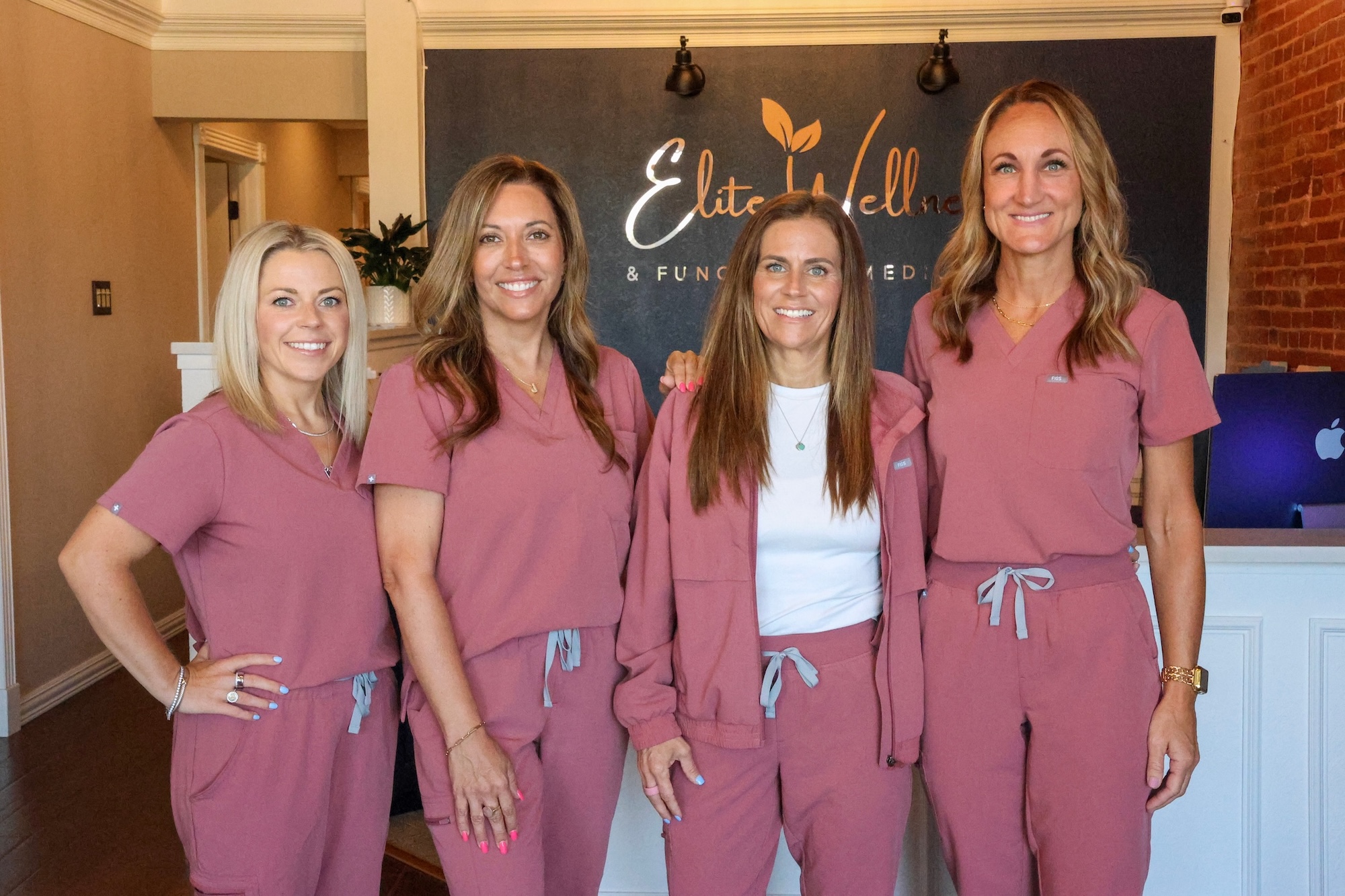
Elite Wellness and Functional Medicine is a brick-and-mortar practice in Midlothian, Texas, just south of Dallas, offering many in-person services that a virtual clinic can't: IV therapy, hormone replacement, sauna, red light therapy, and IV ozone treatments. Lindsey is a nurse practitioner specializing in women's health, also certified in functional medicine, and the practice now includes a clinic manager, a health coach, a registered nurse, and an incoming second nurse practitioner, all working within Practice Better.
Before she opened her own doors, Lindsey worked at a med spa, an aesthetics-first environment with no real infrastructure for the kind of care she wanted to deliver. Client intake ran on paper forms. Follow-up and education happened over standalone email threads that raised more HIPAA questions than they answered.
That gap is common across the functional medicine field. A typical new-patient visit already produces more documentation than almost any other practice type: a lengthy intake, a testing protocol, a supplement plan, and a follow-up strategy, frequently spread across three or four disconnected tools. Lindsey had lived that fragmentation firsthand, and she wasn't willing to build a growing team on top of it.
{{free-trial-simple-text}}
Lindsey started evaluating EHR platforms at the same time she was scouting locations for her brick and mortar practice, treating both decisions with equal weight.
“I didn't want to have to be messaging people, calling people if I had issues. Practice Better had all of their videos and how-to forums and all of that…And so just knowing if I was working on it at 11 p.m. or 5 a.m. that I was going to be able to find my answer no matter what. I didn't have to wait until nine to five when somebody was answering a phone call.”
She spent six to eight weeks before opening customizing forms, consents, and note templates inside Practice Better. When she made her earliest hires, a clinic manager and a collaborating physician required by Texas law, she used Practice Better's administrative role instead of paying for two additional provider seats neither of them needed.
"I wasn't having to pay for another provider at that point. It was just me, the health coach, and then the other two, my clinical manager and my collaborating physician, were both able to be an administrative provider in there."
That single decision let her build a four-person operation from the outset without four provider-level costs. She has since extended her clinic to include a registered nurse and a second nurse practitioner.
Hear how Lindsey keeps her growing team aligned with one platform:
With four people now working inside client charts and messages, Lindsey needed collaboration that didn't route every question back to her.
"If anybody messages me directly, or if I send a message to a client, my clinic manager automatically gets those messages too... If it's something she can take care of, she just takes care of it, and then I don't even have to think about it."
Her clinic manager resolves what she can and flags the rest for a specific window later in the day, rather than interrupting Lindsey mid-appointment. Shared notes and shared schedules mean nothing depends on one person remembering to pass information along.
Lindsey approaches the health of her clients with a basics-first mentality, addressing diet, sleep, stress, and basic nutrient gaps before moving on to advanced testing. After going through the same process with each of her clients individually, she realized she could build it into an eight-week program inside Practice Better. This way she can support her clients virtually, between sessions, and offer a group setting for a shared experience.
"We were able to not just put information in there, but we were able to do voiceovers, add YouTube videos… we also integrated with a chat. So when we have a new cohort that comes in, that cohort all gets a chat."
Weekly live Q&A sessions land directly on each client's appointment calendar inside Practice Better, no separate login or outside meeting link required. Lindsey is already planning a second offering, an alumni community for clients who complete the program, built on the same infrastructure.
Lindsey treats her Practice Better reporting as a standing part of running the business, not a monthly afterthought.
"Just running a quick report, it takes a couple of seconds. This past week, we saw we had a total of 105 total sessions booked, with 74 unique clients... and then we had actually 26 unique services booked."
That same visibility extends to revenue by provider, which matters as Lindsey deliberately shifts her own hours toward running the business.
Watch how Lindsey uses reporting, revenue tracking, and payments together:
Against an opening-year goal of $300,000, the practice closed its first calendar year at $600,000. It crossed $1 million by month fifteen. At eighteen months, Elite Wellness is sitting near $1.2 million, a 66 percent increase over the prior year, achieved without spending on advertising.
"Without having Practice Better, I just don't know that we would have been able to do that."
Built-in payment processing plays a quieter role in that number. The team at Elite Wellness collects through Practice Better's native payments rather than reconciling a separate processor, and she points to one figure as proof the system is tight.
"We're right under 1.2 million, we have like a thousand dollars in outstanding balances. That's unheard of."
With a second nurse practitioner onboarding, Lindsey expects her own share of clinical revenue to shrink as a percentage of the total, on purpose, as she moves toward more time spent on the business itself: refining their foundational group program, building the alumni community, and, eventually, opening the door to a second location in a town growing bigger every day.
Practice Better brings scheduling, charting, group programs, team messaging, reporting, and payments into one system, so a growing functional medicine practice can add a nurse, a coach, or other provider all within one software platform. If you're evaluating what your practice could look like with one platform underneath the whole team, learn more about the Practice Better team plan today.